Some objects are difficult to part with because they are ordinary things carrying extraordinary memories. A chipped mug might remind you of your grandmother’s kitchen. A box of school drawings can hold an entire stage of your child’s life. That is why decluttering sentimental items rarely responds well to the usual advice to simply get rid of what you do not use.
The aim is not to become less sentimental. It is to choose which objects deserve space in your home, while finding other ways to honour the people and moments behind them. A slower, more thoughtful process can reduce regret without turning every keepsake into a permanent obligation.
Understand What You Are Really Holding On To
Before making decisions, ask what the object represents. Is it a particular person, an achievement, a time when life felt different, or a connection you fear losing? Naming that meaning helps separate the memory from the physical object.
You might love a relative’s handwritten recipe because of their handwriting, not because you need the original paper in your kitchen. You could preserve it in a photo or scan, then decide whether the page itself still matters. Sometimes it will. Sometimes the image is enough.
Sentimental decluttering becomes gentler when you stop asking, “Should I throw this away?” and start asking, “How do I want to remember this?”
Start With Easy Decisions, Not Your Most Precious Box
Begin with a small collection that carries some affection but little emotional weight: holiday tickets, old greeting cards or duplicates of photographs. Set aside 20 minutes and choose only a handful of items. Starting with belongings connected to bereavement or a difficult relationship can make the entire task feel overwhelming.
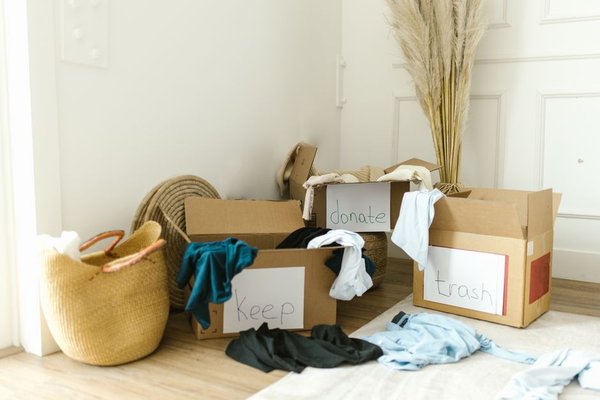
Create three temporary groups: keep, release and undecided. The undecided group matters. You do not need to make a permanent choice while tired, upset or rushed. Give that group a clearly labelled box and a date to revisit it, perhaps in a month.
If sorting reveals practical storage problems elsewhere, a guide to organising small spaces can help you plan a realistic home for the keepsakes you choose.
Use a Decision Process That Respects the Memory
Ask whether the item tells a distinct story
Five similar souvenirs from one trip may not hold five different memories. Choose the one that immediately brings the experience back. Keeping a representative piece can feel more meaningful than storing a whole bag you rarely open.
Notice whether you enjoy seeing or using it
Some memory items deserve everyday visibility. Display a favourite photograph, use inherited serving dishes if they are safe and practical, or frame a handwritten note. Objects tucked away indefinitely are not automatically more respectful than objects you actively appreciate.
Separate love from obligation
A gift was a gesture of affection, not a lifetime storage contract. Similarly, inheriting something does not mean you must keep every piece. You can value the giver and still decide that a bulky ornament does not suit your home. Ask whether you would choose to keep it without the pressure of guilt.
Consider whether another person has a claim
Shared family belongings require care. Before donating a photograph album, heirloom or collection of letters, check whether relatives want it or whether its contents affect their privacy. Offer specific objects rather than handing someone an unsorted box and transferring the burden.
Pause on anything truly irreplaceable
Original documents, one-of-a-kind family photographs and personal letters can warrant a different standard from mass-produced souvenirs. If you are uncertain, preserve them safely while you decide. Decluttering does not have to be a contest to see how little you can own.
Give Keepsakes a Thoughtful Space Limit
A boundary is useful only when it fits your life. One archival box for childhood mementoes, a drawer for letters or a shelf for family objects can work better than a vague promise to keep less. Select the space first, then choose what earns a place in it.
For paper, use labelled folders and protect fragile originals from moisture, sunlight and rough handling. Photographs can be digitised as a backup, but digital copies are not a reason to discard irreplaceable originals automatically. Keep backups in more than one location.
Good keepsake organisation should make your favourites easy to find. It should not hide emotional clutter inside increasingly expensive storage containers.
A Practical Example: Sorting Your Child’s Artwork
Imagine you have three overflowing folders of drawings from primary school. Instead of choosing between keeping everything and keeping nothing, spread out one year at a time. Select a few pieces that show a milestone: an early attempt at writing their name, a funny self-portrait or a drawing with a memorable story.
Ask your child which pictures matter to them if they are old enough to participate. Photograph the rest, noting the date and any story worth remembering. Then place the chosen originals in a portfolio that fits your available space. A simple system for organising paper clutter can help prevent the next school term from rebuilding the pile.
Make Letting Go Feel Like a Decision, Not a Loss
Take a photograph, write a sentence about the object’s history or record a family member describing it. These small rituals can preserve details that the object alone might never explain. For useful possessions, consider giving them to someone who genuinely wants them or donating them where appropriate.
Do not photograph everything automatically. A thousand unlabeled images can become another difficult collection. Save the memories that you would actually revisit, with names or dates so they retain their meaning.
If grief is recent, there is no deadline to clear a loved one’s belongings. Work in short sessions, keep a trusted person nearby if helpful, and stop when the process becomes too painful. Regret is more likely when decisions are made under pressure than when they are given room.
Frequently Asked Questions
How do I declutter sentimental items without feeling guilty?
Identify the memory you want to protect, choose a suitable way to preserve it, and remind yourself that releasing an object does not erase your affection. Start with low-stakes items to build confidence.
What if I regret donating something later?
Reduce the risk by delaying uncertain decisions, photographing meaningful objects and avoiding irreversible choices during emotionally difficult periods. You do not need to discard everything.
Should I keep sentimental gifts I never use?
Not necessarily. The relationship and the gift are separate. Keep the item if it genuinely matters to you, but consider passing it on responsibly if its main purpose has become avoiding guilt.
How many keepsakes is reasonable to keep?
There is no universal number. Choose a realistic amount of storage and prioritise items with distinct stories or lasting significance. The right collection is one you can care for and revisit.
A Home With Room for Both Memories and Living
The best outcome of decluttering sentimental items is not an empty shelf. It is a collection that feels chosen. Give yourself permission to keep what is precious, release what no longer serves the memory, and return to uncertain decisions when you are ready. Your history deserves respect, but so does the space you live in now.