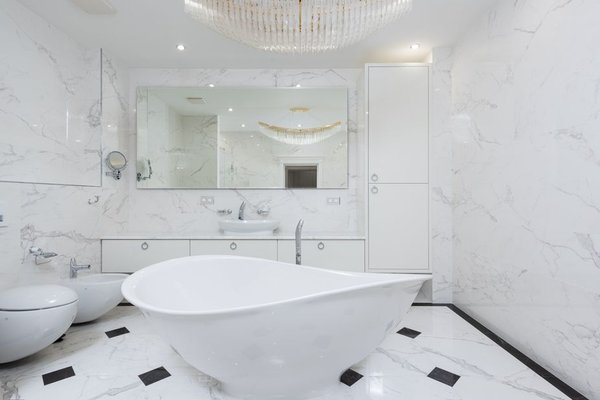
A bathroom suite can look beautifully coordinated online yet be awkward to install in a real UK home. The toilet may not meet the existing soil pipe, the basin might leave too little room beside the door, or a bath that appears standard could be a few centimetres too long. This bathroom suite buying guide puts practical checks ahead of colour and finish, helping you order fixtures that fit your room, plumbing and budget.
Decide what your bathroom suite needs to include
Retailers use “bathroom suite” for different combinations. A typical three-piece suite includes a toilet, basin and bath; some packages contain only matching toilet and basin sets, while others substitute a shower enclosure. Read the contents list rather than relying on the product photograph.
Buying separately can make sense when you need an unusually short bath or narrow basin. Check whether taps, wastes, toilet seat, cistern, bath panels, feet and fixings are included. A low package price is less attractive if essential accessories cost extra.
Take measurements before choosing a style
Measure the room in millimetres at floor level and at the heights where the basin and bath will sit. Older walls are not always straight or square. Record doors, windows, radiators, boxing, sloping ceilings and the positions of water and waste connections.
Compare installed dimensions, not catalogue widths alone
Bathroom suite measurements should include how far each fitting projects into the room and the space needed to use it. Allow standing room at the basin, knee room at the toilet, access into the bath and a clear door swing.
For example, imagine a 1,700 mm wall-to-wall recess occupied by an older bath. A new bath advertised as 1,700 mm long is not automatically a drop-in replacement: check its technical drawing, wall finishes, edge profile and installation tolerances. A guide to small bathroom layouts can help test the arrangement before ordering.
Choose a toilet that works with the existing soil pipe
A close-coupled toilet has its cistern directly behind the pan and is often straightforward to replace. Back-to-wall models hide the cistern in furniture or a wall space. Wall-hung toilets require a suitable supporting frame and concealed cistern, making them more involved installations.
Check the soil outlet direction and position, the height of the connection, water inlet location and total pan projection. A pan connector can accommodate some differences, but it cannot solve every alignment problem. Ask your plumber to approve the manufacturer’s drawing before purchasing a different toilet style.
Consider seat height, cleaning access and whether replacement seats and flush mechanisms are readily available. For concealed systems, insist on proper servicing access. A dependable flush and compliant fittings are more valuable than decorative features.
Compare basins by usable space and plumbing
Bathroom suite sizes vary significantly at the basin. A compact cloakroom basin may save space but offer limited washing room. A full pedestal basin conceals some pipework; a semi-pedestal or wall-hung basin can create an airier look but may need suitable wall support. Vanity units add storage at the cost of extra depth.
Look beyond stated width. Check basin projection, bowl depth, tap-hole configuration, overflow provision and the route for the waste trap. Confirm that the chosen taps suit the basin, your home’s water pressure and hot-water system.
When comparing toilet and basin sets, make sure each part works in your room independently. A basin size and placement guide can help you assess reach, splash space and door clearance before committing.
Select the bath around daily use
A straight bath measuring approximately 1,700 x 700 mm is common in UK homes, but shorter 1,500 mm and 1,600 mm options and wider models are available. Compare internal bathing space as well as external dimensions. Wide rims can make a bath feel smaller inside than another product with the same footprint.
Think about who uses it: children, adults who enjoy a soak, or people who need easier entry. If the bath doubles as a shower, check that its shape supports a suitable screen and the taps will not obstruct access. Decide between single-ended, double-ended and shower-bath layouts before choosing panels and tap positions.
Acrylic baths are often lighter and relatively affordable; reinforced versions can feel more rigid. Enamelled steel baths have different weight and fitting considerations. Compare warranties, support requirements and the availability of replacement parts. A bath size and layout guide can help narrow the options.
Match quality, compatibility and the real total price
Use a bathroom fixtures guide mindset when comparing quotes: assess each component, not just the package price. Ceramic basins and toilets should have an even glazed finish and accessible fixing points. Check the manufacturer’s instructions, measurements and evidence that relevant water fittings comply with UK requirements. A particular approval mark may demonstrate compliance, but it is not the only possible route.
Build a complete purchase total covering the suite, taps, wastes, bath panel, seals, connectors, delivery and fitting. Moving a toilet’s soil connection or installing a concealed cistern can change labour costs considerably. Obtain a written installation quote based on the exact products, with some contingency for surprises behind old fittings.
Check the order before paying
Ask for technical drawings and an itemised list of included parts. Confirm finish codes if mixing manufacturers, delivery dates, spare-part availability and how damaged ceramics will be handled. Check that the largest items can reach the bathroom through stairs and doorways.
Inspect goods on arrival and report damage promptly. Online purchases generally have statutory cancellation rights, with exceptions such as certain made-to-order goods; return transport for bulky fixtures can be costly. Avoid removing your existing bathroom until replacement parts have arrived and been checked.
Frequently asked questions
Is it cheaper to buy a complete bathroom suite?
Sometimes. A package can cost less than equivalent individual pieces and takes the guesswork out of matching. Compare the final price after adding taps, wastes, seats, panels, delivery and fitting. Plumbing alterations can erase any saving.
Can I replace a bathroom suite without moving the plumbing?
Often, if the new bath, basin and toilet suit existing positions and connections. However, toilet outlets, basin traps and tap inlets still need checking against technical drawings. Have your installer confirm compatibility before ordering.
What bathroom suite sizes suit a small UK bathroom?
There is no single correct set. Shorter baths, reduced-projection toilets and compact basins can help, but the best combination depends on door clearance, waste positions and comfortable access. Measure the finished space rather than trusting a “small bathroom” label.
Should I buy matching toilet and basin sets?
Choose a matching set when both dimensions and plumbing connections suit the room. Otherwise, separate fixtures in a similar white finish can look cohesive while allowing a more practical basin or toilet.
Make the final decision on fit, not photographs
Shortlist suites only after checking your measured layout, plumbing connections and the contents of each offer. Then compare comfort, maintenance, materials and installed cost. The best choice works smoothly every day, not merely in a product photograph.