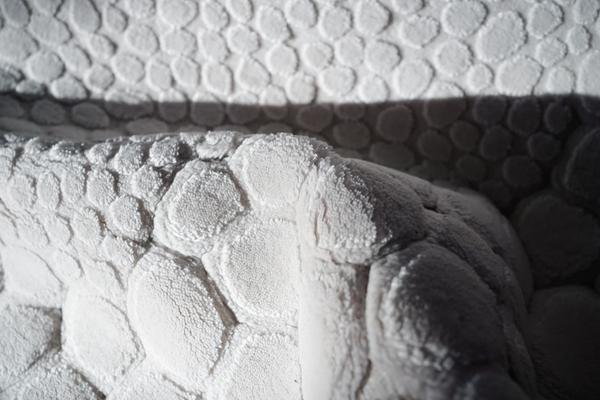
Texture can make a room feel finished even when the colour palette is simple. A space dressed in cream, taupe or grey can feel rich when surfaces respond differently to light and touch. Layered texture interior design combines contrasting weights, finishes and tactile qualities so a room develops depth without relying on colour or pattern.
The strongest schemes balance rough, smooth, soft, woven and polished surfaces so the eye moves naturally around the room. Linen beside timber feels relaxed; boucle against glass looks refined; rattan next to painted cabinetry adds warmth and irregularity. The aim is a quiet rhythm rather than visual clutter.
Start With the Room’s Existing Texture
Before buying cushions or throws, look at the permanent surfaces already in place. Flooring, walls, curtains, large furniture and cabinetry form the texture base. A room with wool carpet, matte walls and linen curtains starts much softer than one with timber flooring, leather seating and glass tables.
Use that base to identify what is missing. If most surfaces are smooth, add weave, grain or pile. If the room already has thick upholstery and deep carpet, introduce cleaner finishes such as metal, glass or polished timber. This keeps textured home decor purposeful rather than turning it into unrelated accessories.
Living Room: Layer From Large Surfaces Down
The living room offers the most opportunities for tactile home styling, so start with the largest areas. A wool rug gives a different visual weight from a flat-weave jute rug, while linen curtains soften hard window lines. Upholstery provides another layer. Boucle furniture works particularly well as an accent because its looped surface catches light gently and adds depth even in a neutral shade.
Consider a typical UK living room with a beige sofa, pale walls and laminate flooring. Instead of adding several new colours, place a medium-pile rug beneath the seating area, hang linen curtains, introduce one boucle chair and add a rattan side table or basket. A smooth ceramic lamp provides contrast. Each material contributes something distinct, so the room feels warmer without becoming busier.
Prevent Soft Textures From Feeling Heavy
Too many plush surfaces can make a room visually dense. If you combine boucle seating, a deep rug and chunky cushions, offset them with glass, metal or smooth timber to restore contrast.
Bedroom: Put Texture Where Comfort Matters
Bedrooms are naturally suited to layering because bedding already creates several surfaces. Rather than buying a perfectly matched set, vary the finish while keeping the palette controlled. Crisp cotton sheets, a washed-linen duvet cover and a brushed wool throw can sit within the same tonal family while still looking different.
An upholstered headboard, timber bedside tables and woven lampshades add quieter background texture. Rattan interior ideas also work well when used sparingly. A cane-front bedside cabinet, small bench or pendant shade is usually enough to introduce natural variation without making the room feel overly rustic.
Dining Room: Soften Hard Surfaces With Weave
Dining rooms often contain timber tables, hard flooring and metal fittings, so woven or upholstered elements help soften the overall effect. Fabric dining chairs, linen curtains or a natural-fibre rug can make the room feel more comfortable, while handmade-look ceramics introduce smaller-scale texture at tabletop level.
Cane-backed dining chairs are a useful way to explore rattan interior ideas because the open weave creates pattern through construction rather than print. Pair them with a solid timber table and avoid repeating rattan in every accessory. One confident woven element usually has more impact than several competing ones.
Kitchen: Contrast Practical Finishes
Kitchens need durable surfaces, but they do not have to feel flat. Texture can come from the contrast between matte cabinetry, lightly grained timber, stone worktops, glazed tiles and brushed metal. These materials create depth without filling worktops with decorative objects.
A predominantly white kitchen can feel layered when cabinet fronts are matte, splashback tiles have subtle variation, stools use timber or woven seats, and linen tea towels add softness. The colour scheme stays simple, but the room gains character through finish and material.
Bathroom: Add Texture Without Clutter
Bathrooms benefit from restrained layering. Towels, bath mats and shower curtains already provide softness, so one or two fixed textures are often enough. Ribbed glass, fluted cabinetry, stone-effect tiles or sealed timber-look storage can introduce interest while remaining practical.
Choose materials that suit humid conditions. Natural baskets can work in well-ventilated areas, but washable textiles and moisture-resistant finishes should do most of the work around baths and showers. Texture should improve the room, not create a maintenance problem.
A Simple Formula for Mixing Textures
When a room feels flat or overloaded, sort its main surfaces into three broad groups: soft, natural and smooth. Soft includes wool, boucle and linen; natural includes timber, rattan and stone; smooth includes glass, metal, glazed ceramic and polished finishes. You do not need equal amounts of each, but balanced rooms usually contain some contrast between them.
Photograph the room in daylight and notice where light is absorbed or reflected. If everything looks equally matte, add one cleaner finish. If most surfaces look shiny or hard, introduce a woven or soft layer. Related topics such as living room styling ideas, natural material kitchen ideas and how to mix interior materials can support further internal reading.
Common Texture Mistakes to Avoid
One mistake is confusing texture with clutter. Several cushions do not automatically create depth if they all use similar fabric and scale. Another is repeating one fashionable material too often. Boucle furniture is distinctive, so a single chair or bench can be stronger than using it on every seat.
Also consider practical context. Deep-pile fabrics are less suitable in high-spill zones, while delicate natural fibres need careful placement in damp rooms. Most importantly, do not add texture only through accessories. A room usually feels more convincing when its larger surfaces participate through curtains, rugs, upholstery, timber grain or wall finish.
Frequently Asked Questions
What is layered texture interior design?
It is the practice of combining surfaces with different tactile and visual qualities, such as linen, wool, timber, rattan, glass and metal, to create depth and warmth. The emphasis is on contrast and balance rather than adding more colour.
How many textures should you use in one room?
There is no fixed number. Focus on whether the room has enough variation between soft, natural, rough and smooth finishes. A few clearly different material qualities are usually enough when repeated thoughtfully.
Can layered textures work in a small room?
Yes. Keep the colour palette controlled and choose different finishes rather than bulky layers. Linen, smooth timber, a fine-weave rug and one woven accent can add depth without making a small room feel crowded.
Do layered textures suit neutral interiors?
They are especially effective in neutral rooms because differences in weave, grain, pile and sheen prevent similar colours from looking flat. Texture allows a restrained palette to feel warm, detailed and comfortable.
Bring the Scheme Together Through Contrast
Layering works best when every material has a reason to be there. Start with the room’s existing surfaces, identify what feels too smooth, soft or heavy, then add measured contrast. Linen, boucle, rattan, timber, ceramic and metal can sit comfortably together when their proportions are controlled.