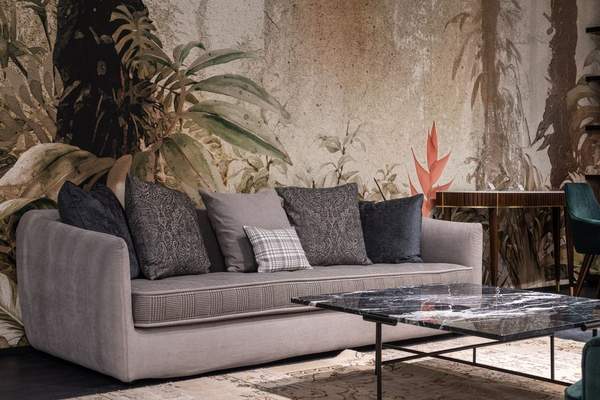
Cushions can change the mood of a sofa faster than almost any other accessory. A new colour, texture or arrangement can make the same sofa feel fresh without replacing a major piece of furniture. The aim is simple: make the sofa look finished without making it uncomfortable.
If you are wondering how to style cushions on a sofa, focus on three things: number, size and how the colours and patterns connect with the room.
How many cushions should you put on a sofa?
There is no universal number because sofa width, seat depth and arm style all affect the result. As a starting point, two cushions can suit a compact two-seater, three to five often work on an average three-seater, and five to seven can suit a generous four-seater or sectional.
The better test is usable seating. If everyone has to remove several cushions before sitting down, the sofa is probably over-styled. Deep sofas can carry more layers than shallow ones, while a small sofa with wide arms usually needs fewer cushions.
Odd numbers often feel relaxed, while even-numbered arrangements can look tailored. Two matching pairs can suit a formal room; three cushions grouped loosely feel more informal.
Choose cushion sizes that suit the sofa
Size gives a cushion arrangement structure. Several cushions in exactly the same dimensions can look flat, especially on a large sofa. Layering two or three sizes creates a clearer foreground and background.
Useful sizes for layering
For many standard sofas, a 50 x 50 cm square is a dependable starting point. Larger 55 x 55 cm or 60 x 60 cm cushions can work at the back of a deep sofa, while 45 x 45 cm squares are useful in front. A lumbar cushion around 30 x 50 cm can finish a group without adding much bulk.
A practical three-seater example is two 50 x 50 cm cushions at the outer corners, one 45 x 45 cm cushion in front on one side, and a lumbar cushion on the other. The unequal grouping feels balanced without looking staged.
Build the colour palette from the room
The easiest cushion arrangement ideas usually begin with colours that already exist nearby. Look at the rug, curtains, artwork, walls and other upholstered pieces. Choose one or two tones to repeat, then add a contrasting shade if the room needs more energy.
A beige sofa might combine rust, olive and cream. A charcoal sofa could take soft blue, off-white and muted ochre. If the room already contains several strong colours, quieter cushions can help the seating area feel settled.
For a connected scheme, repeat a small colour from elsewhere in the room. A thin blue detail in a patterned cushion can echo artwork or a vase without creating an obvious matching set. The same principle can guide small living room colour ideas.
Mix patterns without creating visual noise
Mixing cushion patterns is easier when the patterns differ in scale. Three similarly busy prints tend to compete. Instead, combine one dominant pattern, one smaller-scale pattern and one quieter solid or textured cushion.
For example, start with a broad stripe or large botanical, add a small geometric print that shares at least one colour, then use a plain velvet or woven cushion to give the eye somewhere to rest. The patterns do not need to come from the same collection; they need a connection.
If you prefer a calmer look, use texture as pattern. Bouclé, corduroy, velvet and chunky woven fabrics can create depth even when the colours are nearly identical.
Arrange cushions in layers, not a straight line
A row of identical cushions can feel rigid because every cushion has the same visual weight. Instead, place larger cushions nearest the arms or at the back, then bring smaller cushions forward. Leave some upholstery visible between groups so the sofa still looks inviting.
On a three-seater, try a pair on one side and a group of three on the other. On a sectional, use one larger cluster in the corner where the sections meet and a smaller group at the opposite end.
If the sofa sits in a compact room, keep the cushion volume in proportion with the furniture layout. The same thinking applies to how to arrange furniture in a small living room: comfort and circulation should come before decorative fullness.
Choose inserts for shape and comfort
The insert affects how a cushion looks as much as the cover. An underfilled insert can look loose, while one that is too large may strain seams or distort the cover. Check the manufacturer’s sizing guidance, especially for structured fabrics.
Feather and down-blend inserts tend to look soft and can be reshaped easily. Fibre or synthetic inserts can hold a plumper shape and may suit households that prefer lower-maintenance options. For an everyday sofa, comfort matters more than achieving a perfect showroom crease.
Refresh the sofa without replacing everything
Keep a dependable base of neutral cushions and rotate one or two smaller covers when you want a change. Lighter textures can suit warmer months, while velvet and deeper tones can make cooler months feel cosier. It is a simple budget-friendly living room update that avoids replacing the whole set.
Common cushion styling mistakes
The most common mistake is buying a matching bundle before considering the sofa. Identical size, colour and pattern can make the arrangement look flat. Another is choosing cushions purely for appearance when they are too firm, scratchy or bulky for normal use.
Also watch for overcrowding. If the sofa looks noticeably smaller once the cushions are added, remove one or two and reassess. The best styling should make the sofa look more comfortable, not less usable.
FAQ
Should sofa cushions match?
No. They should feel related, but they do not need to be identical. Repeating one or two colours while varying pattern, texture and size usually creates a more natural look.
Is three cushions enough for a three-seater sofa?
Yes. Three can look excellent, especially on a smaller three-seater. Try two larger cushions at opposite ends with a smaller feature cushion slightly off-centre, or group two at one end and leave one at the other.
What size cushions look best on a sofa?
Many standard sofas work well with 50 x 50 cm cushions as the main size, supported by smaller 45 x 45 cm squares or a rectangular lumbar cushion. Deeper sofas can often handle 55 cm or 60 cm cushions at the back.
How do you mix cushion patterns successfully?
Vary the scale of the patterns and repeat at least one colour across the group. Combine a large-scale print with a smaller motif and a plain or textured cushion so the arrangement has both interest and visual rest.
Make the sofa look inviting, not untouchable
Good cushion styling is less about following a fixed formula and more about proportion, comfort and connection to the room. Start with the sofa’s real seating space, layer useful sizes, repeat colours already present and mix patterns at different scales.
The finished arrangement should look considered without seeming precious. If the cushions improve the sofa visually while still inviting people to sit down and use the room normally, you have found the right balance.