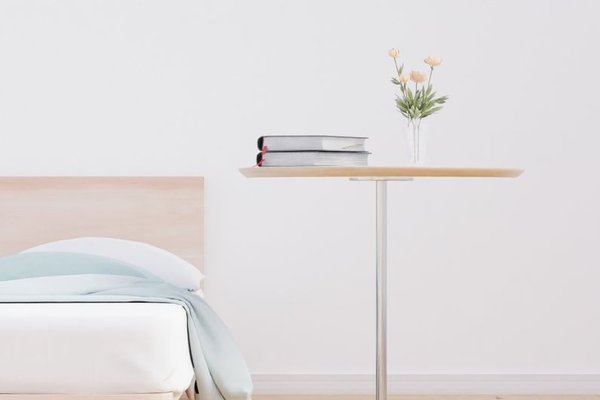
For years, interior style has been framed as a choice between two extremes: the pared-back calm of minimalism or the colour, pattern and personality of maximalism. Midimalism offers a more useful middle ground. Emerging as a recognisable 2026 interiors trend, the midimalism interior style keeps the breathing room of minimal spaces while making space for texture, collected objects, richer colour and the details that make a home feel lived in.
That balance is especially relevant to UK homes, where rooms are often multifunctional and storage is not unlimited. Rather than stripping a room until it feels anonymous, or filling every surface, midimalism asks a better question: what deserves to stay, and how can it be displayed with intention?
What does midimalism actually mean?
Midimalism is best understood as disciplined layering. It borrows minimalism’s editing, clean shapes and appreciation of space, then adds some of maximalism’s warmth, character and visual interest. The result is a calm interior style that feels considered rather than empty.
The key distinction is that midimalism is not simply “more minimalism” or “less maximalism”. It is a minimalist maximalist mix built around selectivity. A room might contain a simple sofa, one patterned armchair, a timber side table, a textured rug and a small group of meaningful objects. There is enough variety to create personality, but not so much that the room becomes visually noisy.
Why midimalism feels right for 2026
Design coverage in 2026 reflects a wider move away from stark, showroom-like minimalism and towards homes that feel warmer, softer and more personal. Midimalism fits that shift because it does not require homeowners to abandon order or practicality. Instead, it makes those qualities more human.
It also reflects the way people decorate in real life. Most homes contain a mix of old and new pieces, practical purchases and sentimental objects. Midimalism decor turns that mixture into a strength. A vintage lamp can sit beside a contemporary cabinet, while handmade ceramics or a patterned cushion add character to an otherwise restrained scheme.
The visual ingredients of a midimalist room
Start with a quiet foundation
Midimalism works best when the main surfaces provide visual calm. That does not mean every wall must be white. Warm off-whites, mushroom, clay, muted green, soft taupe and dusty blue can all create a low-key background. The aim is to let individual objects register without forcing everything to compete.
Use texture before adding more stuff
Texture is one of the easiest ways to make a restrained room feel rich. Think wool, linen, timber, stone, woven fibres, boucle, aged metal or handmade ceramics. These materials introduce variation through touch, shadow and natural irregularity, so a room can feel layered even when the number of objects is limited.
This is where midimalism connects naturally with intentional home styling. Instead of filling an empty corner with several accessories, use one sculptural floor lamp, a tactile curtain and a substantial plant. The corner feels complete without looking crowded.
Choose focal points rather than decorating everywhere
A midimalist room is usually stronger when attention is directed. The focal point might be a patterned headboard, a large artwork, a statement rug, a coloured cabinet or a small cluster of ceramics. Once you have chosen it, let surrounding elements become quieter. If the rug carries bold pattern, for example, the sofa and curtains can stay comparatively simple.
How to create midimalism in a typical UK living room
Imagine a compact Victorian terrace living room with a neutral sofa, pale walls, laminate flooring and several small decorative objects spread across every surface. The room is not heavily cluttered, but it feels fragmented.
A midimalist approach would not require replacing everything. Remove the least meaningful accessories and group the remaining pieces. Add a larger wool rug to anchor the seating area. Replace several small cushions with two or three in varied textures, perhaps one patterned and two plain. Introduce a warmer wooden side table or vintage stool, then choose one larger artwork rather than several undersized prints.
The room now has fewer visual interruptions but more depth. That is the practical heart of midimalism: reducing weak details so stronger ones can be noticed.
Where midimalism often goes wrong
The most common mistake is treating the trend as permission to add random decorative pieces to a minimalist room. Without a clear palette or hierarchy, the result can simply look cluttered. Another problem is making everything “special”. If every chair, lamp, cushion and ornament is a statement piece, there is no resting point for the eye.
It can also become too beige. A calm interior style still needs variation. If the palette is restrained, bring in contrast through wood tone, stone, metal, woven materials or a small amount of colour. Midimalism should feel warm and personal, not washed out.
A simple editing rule for midimalism decor
When styling a shelf, coffee table or console, try a “keep, group, strengthen” method. Keep only items you genuinely like or use. Group related objects so they read as one composition rather than scattered clutter. Then strengthen the arrangement with one element that adds scale, height, texture or colour.
For example, three small framed photos placed separately across a console may look busy. Grouping them beside a single ceramic lamp and leaving part of the surface empty creates a more deliberate composition. The empty space is not wasted; it gives the objects presence.
FAQ
Is midimalism the same as warm minimalism?
They overlap, but they are not identical. Warm minimalism usually softens minimalist spaces with natural materials, warmer colours and tactile finishes. Midimalism goes further by welcoming selected pattern, decorative objects and stronger expressions of personality.
Can midimalism work in a small home?
Yes. It can be particularly effective in smaller UK homes because it prioritises editing and intentional placement. Choose fewer decorative pieces, use furniture that earns its space and create one or two focal points rather than layering every surface.
What colours suit the midimalism interior style?
There is no fixed palette, but grounded colours tend to work well: warm neutrals, muted greens, dusty blues, terracotta, burgundy and softened yellows. Stronger colours are usually most effective when concentrated in one or two places.
Do I need to buy new furniture to achieve midimalism?
No. Repositioning furniture, removing weaker accessories, introducing a textured rug or changing one light fitting can shift a room towards a more balanced, intentional look.
A more personal kind of restraint
Midimalism replaces the pressure to choose between “less” and “more” with something more adaptable. It keeps the clarity of minimalism but leaves space for memory, craft, colour and character. That makes it less like a rigid decorating formula and more like a practical way to approach a home.
The strongest midimalist rooms are not defined by how many objects they contain, but by how clearly those objects have been chosen. Leave breathing room, layer texture, give personality a few strong places to appear, and let the rest of the room support them. The result feels calm without being bare and expressive without becoming overwhelming.