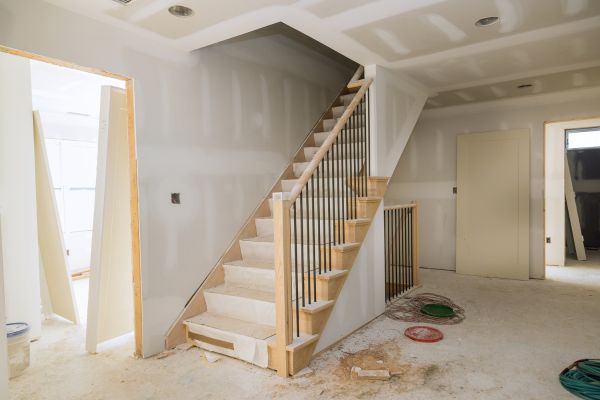
Home renovation projects often start with a simple realization: the house you live in no longer fits your needs. Maybe the kitchen is outdated, the roof needs repair, or the bathroom has been begging for an upgrade for years. Renovating a home can improve comfort, safety, and property value. Yet for many homeowners, the biggest challenge isn’t choosing tiles or paint colors—it’s finding the money to pay for the work.
When credit scores are less than perfect, financing a renovation can feel like an uphill climb. Traditional lenders often place heavy emphasis on credit history, leaving many homeowners unsure where to turn. Still, home renovation financing with bad credit is far from impossible. With the right understanding of available options and realistic expectations, homeowners can still move forward with important improvements.
Understanding Why Credit Matters in Renovation Financing
Before exploring specific financing methods, it helps to understand why lenders pay so much attention to credit scores. Credit history acts as a signal of how reliably someone has handled debt in the past. For lenders, this information helps estimate the risk involved in approving a loan.
A lower credit score typically suggests a higher chance that payments could be late or missed. Because of that perceived risk, lenders may charge higher interest rates or require additional conditions. In some cases, applicants with poor credit might be denied altogether.
However, home improvement projects have one key advantage: they involve a property that can increase in value. Some financing programs consider this potential value rather than focusing solely on credit scores, which opens doors for homeowners who might otherwise struggle to obtain funding.
Government-Backed Programs That Support Home Improvements
One of the most accessible paths for home renovation financing with bad credit comes through government-backed programs designed to support homeowners. These programs often allow more flexibility than conventional loans.
For example, renovation-focused mortgage programs allow homeowners to borrow funds based on the projected value of their home after improvements are completed. This means the renovation itself becomes part of the property’s long-term value.
Because these programs are supported by government agencies, lenders sometimes accept lower credit scores than they would for standard loans. While approval still depends on financial stability and income, the requirements tend to be less restrictive than traditional lending options.
These types of loans are often used for major projects such as structural repairs, roofing replacements, plumbing upgrades, or full-room remodels. For homeowners dealing with both renovation needs and imperfect credit histories, they can be a practical starting point.
Home Equity Loans and Lines of Credit
If a homeowner has built up equity in their property, that value can sometimes be used as leverage for renovation financing. Home equity loans and home equity lines of credit are two common options.
A home equity loan provides a lump sum of money based on the amount of equity in the property. Borrowers repay the loan over time with fixed monthly payments. Because the loan is secured by the home itself, lenders may be more willing to work with borrowers who have weaker credit histories.
A home equity line of credit, often referred to as a HELOC, functions more like a credit card. Instead of receiving all funds at once, borrowers can withdraw money as needed during a designated draw period. This can be helpful for renovation projects where expenses appear gradually rather than all at once.
That said, homeowners should approach these options carefully. Since the home is used as collateral, failing to keep up with payments could lead to serious financial consequences. Responsible budgeting and a clear renovation plan are essential before pursuing this route.
Personal Loans for Smaller Renovation Projects
Not every renovation requires major financing. Smaller upgrades such as repainting, replacing flooring, or upgrading fixtures may only require modest funding. In these cases, personal loans can sometimes fill the gap.
Personal loans are typically unsecured, meaning they don’t require collateral like a house or vehicle. Because of this, lenders rely heavily on credit scores and income when evaluating applications. For borrowers with poor credit, approval may still be possible, but interest rates tend to be higher.
Even with higher rates, personal loans can be appealing because they offer simplicity. Funds are usually deposited quickly, and repayment schedules are straightforward. For homeowners who need to address urgent repairs or minor improvements, this can be a practical short-term solution.
The key is borrowing responsibly and ensuring that monthly payments remain manageable within the household budget.
Contractor Financing and Payment Plans
Another pathway that many homeowners overlook involves financing options offered directly by contractors or renovation companies. Some contractors partner with financial institutions to provide payment plans designed specifically for home improvement projects.
These plans can sometimes offer promotional interest rates or flexible repayment terms. Approval standards vary widely, but some programs are designed to accommodate applicants with less-than-perfect credit.
Contractor financing is particularly common for projects like roofing replacements, HVAC installations, or solar upgrades. Because the financing is tied directly to the renovation service, the process can feel more streamlined compared to seeking a separate loan.
Still, it’s wise to review the terms carefully. Interest rates, deferred payments, and promotional periods can vary significantly, and homeowners should make sure they understand the full cost before signing an agreement.
Credit Cards and Short-Term Financing
In certain situations, homeowners use credit cards to fund renovation expenses. While this approach is rarely suitable for large projects, it can help cover smaller purchases such as tools, materials, or appliances.
Some credit cards offer introductory zero-interest periods that last several months. If the balance can be paid off before the promotional period ends, this can reduce the overall cost of borrowing.
However, credit cards also carry risks. Interest rates after promotional periods can be high, and carrying large balances may further impact credit scores. For that reason, this strategy tends to work best when the renovation budget is limited and repayment is realistic within a short timeframe.
Improving Approval Chances with Strategic Preparation
Even when seeking home renovation financing with bad credit, preparation can make a meaningful difference. Lenders often look beyond credit scores alone and consider the broader financial picture.
Stable income, manageable debt levels, and consistent payment histories on recent accounts can all improve the likelihood of approval. Providing clear documentation and demonstrating a realistic renovation plan may also strengthen an application.
Another helpful step involves reviewing credit reports before applying for financing. Errors occasionally appear in credit histories, and correcting them could raise a credit score slightly. Even small improvements can expand available lending options.
Borrowers sometimes also consider applying with a co-signer who has stronger credit. This can increase lender confidence, though it also means the co-signer shares responsibility for the debt.
Renovating in Phases When Financing Is Limited
When financing options are constrained, a phased renovation approach can provide a practical alternative. Instead of tackling an entire project at once, homeowners can divide improvements into smaller stages completed over time.
This strategy reduces the amount of money needed upfront and allows homeowners to fund projects gradually through savings or smaller loans. It also creates opportunities to reassess priorities between phases, ensuring that the most important repairs are completed first.
While phased renovations may extend the overall timeline, they often reduce financial pressure and help homeowners avoid taking on more debt than they can comfortably manage.
Balancing Renovation Goals with Financial Stability
Home improvement projects can be exciting, especially when they promise to transform a living space. But renovations should never come at the expense of long-term financial health.
Borrowers exploring home renovation financing with bad credit benefit from approaching the process thoughtfully. Comparing multiple lenders, understanding loan terms, and planning a realistic budget can prevent unnecessary financial strain.
It’s also worth remembering that not every renovation must happen immediately. Sometimes waiting, saving, and improving credit gradually can open doors to better financing opportunities in the future.
A Practical Path Forward
Renovating a home while dealing with credit challenges may feel daunting, but it is far from impossible. Across government-backed loans, equity-based financing, personal loans, contractor payment plans, and phased renovation strategies, homeowners have more options than they might initially expect.
The key lies in understanding the available choices and selecting the one that aligns best with personal financial circumstances. By balancing renovation ambitions with careful planning, homeowners can make meaningful improvements without putting their financial stability at risk.
In the end, the goal of any renovation is not simply to update a space, but to create a home that supports everyday life more comfortably. With patience, preparation, and informed decision-making, even those navigating imperfect credit can find a workable path toward achieving that goal.