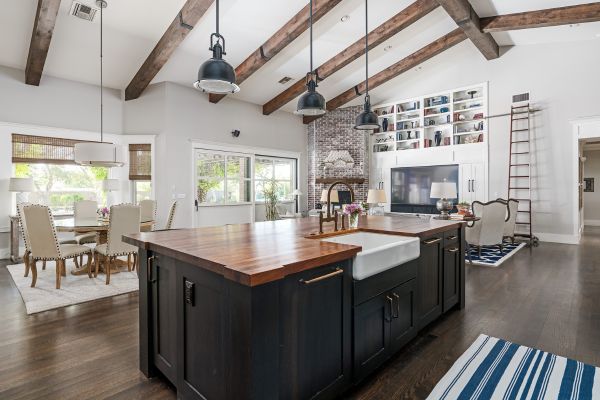
Kitchen trends tend to evolve slowly, but every few years, certain styles shift in noticeable ways. The farmhouse kitchen has already gone through several transformations, moving from heavily rustic interiors filled with distressed wood and vintage signs to cleaner, softer, and more balanced spaces. In 2026, the style continues to mature, blending warmth and simplicity with modern functionality in ways that feel far more personal than formulaic.
What makes modern farmhouse kitchen design trends so interesting right now is their flexibility. The look is no longer tied to one exact aesthetic. Some kitchens lean toward Scandinavian minimalism with light woods and muted colors, while others embrace darker cabinetry, mixed metals, or organic textures inspired by countryside homes. The common thread is comfort. These kitchens are designed to feel lived in without appearing cluttered.
There is also a growing emphasis on authenticity. Homeowners seem less interested in perfectly staged interiors and more drawn to spaces that combine practicality with character. Kitchens are becoming softer, calmer, and more connected to everyday life rather than simply functioning as design showcases.
Warm Neutral Colors Are Replacing Stark White Spaces
For years, bright white kitchens dominated modern farmhouse interiors. White cabinets, white subway tile, and white countertops became almost synonymous with the style itself. In 2026, that palette is shifting toward warmer and more layered tones.
Creamy off-whites, soft taupes, earthy greiges, muted olive greens, and warm mushroom shades are appearing more frequently in cabinetry and wall colors. These tones create kitchens that feel grounded and inviting rather than overly polished.
The change likely reflects a broader movement in interior design away from cold minimalism. People seem to want homes that feel comforting and natural, especially in spaces where families gather daily.
Wood finishes are also becoming warmer. Pale gray-toned woods are gradually giving way to richer oak, walnut, and honey-colored textures that add softness without overwhelming the room.
The result is a kitchen that feels relaxed and welcoming, almost as though it has evolved naturally over time rather than being designed all at once.
Natural Materials Are Taking Center Stage
One of the defining elements of modern farmhouse kitchen design trends is the renewed appreciation for natural materials.
Stone countertops with visible veining, handmade ceramic tiles, reclaimed wood beams, and textured plaster walls are becoming increasingly popular. These surfaces add subtle imperfections that make kitchens feel more human and less manufactured.
There is also growing interest in unlacquered metals such as brass and copper. Unlike highly polished finishes, these materials develop patina gradually, changing appearance over time through everyday use. That sense of aging and character fits naturally within the farmhouse aesthetic.
Even flooring choices are shifting toward authenticity. Wide-plank hardwood floors remain popular, but many homeowners now prefer finishes that reveal grain patterns and natural wear rather than perfectly smooth surfaces.
These details may seem small individually, yet together they create spaces with far more visual depth and warmth.
Statement Range Hoods Are Becoming Design Anchors
Range hoods are no longer treated as purely functional kitchen elements. In many modern farmhouse kitchens, they have become central design features.
Wood-clad hoods with curved silhouettes, plaster-finished structures, and oversized custom-built designs are increasingly common in 2026 interiors. Instead of blending into cabinetry, these hoods often act as focal points that define the entire cooking area.
There is something almost architectural about this trend. Kitchens are moving away from overly uniform designs toward layouts that include intentional visual variation.
At the same time, these statement pieces remain relatively understated compared to some dramatic contemporary styles. The emphasis is less about boldness for its own sake and more about creating texture and balance within the space.
It is a subtle kind of elegance, which may explain why the trend feels surprisingly timeless.
Open Shelving Is Becoming More Thoughtful
Open shelving has been part of farmhouse kitchens for years, but the approach is changing.
Earlier versions of the trend often resulted in heavily styled shelves filled with decorative objects that looked beautiful but felt impractical. In 2026, open shelving is becoming more restrained and functional.
Instead of covering entire walls, homeowners are using smaller sections of open shelving to display frequently used dishes, handmade ceramics, cookbooks, or simple glassware. The styling feels less staged and more organic.
Wood shelves with visible grain remain especially popular because they soften the visual weight of kitchens filled with cabinetry and appliances.
There is also a growing preference for mixing open and closed storage thoughtfully rather than choosing one approach exclusively. People still value clean spaces and hidden storage, but they also want kitchens to feel personal rather than sterile.
That balance is becoming central to modern farmhouse design overall.
Large Kitchen Islands Continue to Evolve
Kitchen islands remain one of the most important features in farmhouse-style layouts, but their role is becoming more multifunctional.
In many homes, islands now serve simultaneously as cooking stations, dining tables, homework spaces, coffee corners, and social gathering spots. Because of this, island designs are becoming more substantial and furniture-like.
Wood-accented bases, waterfall stone edges, integrated shelving, and mixed-material combinations are increasingly common. Some islands resemble oversized farmhouse tables more than traditional cabinetry structures.
There is also renewed interest in seating arrangements that feel relaxed and conversational rather than highly formal. Upholstered stools, curved seating areas, and softer edges contribute to a more welcoming atmosphere.
The kitchen island has quietly become the emotional center of many homes, which explains why so much design attention focuses on it.
Vintage Influences Are Returning in Softer Ways
Farmhouse kitchens have always borrowed from vintage aesthetics, but recent trends are moving away from overly themed rustic decor.
Instead of relying on obvious farmhouse symbols or heavily distressed finishes, designers are incorporating subtler vintage-inspired details. Antique-style lighting, aged brass fixtures, old-world pantry cabinets, and traditional hardware designs add character without feeling overly decorative.
Furniture-style hutches and freestanding storage pieces are also making a comeback. These additions help kitchens feel layered and collected over time rather than purchased entirely from one showroom.
Interestingly, the most appealing farmhouse kitchens often avoid looking perfectly coordinated. Slight variations in finishes, textures, and materials create spaces that feel more authentic and lived in.
Imperfection is becoming part of the aesthetic itself.
Hidden Technology Is Blending Into Traditional Design
Modern farmhouse kitchens may appear warm and traditional on the surface, but many now include highly advanced technology integrated quietly into the design.
Panel-ready appliances that blend seamlessly with cabinetry are becoming more common. Smart ovens, touchless faucets, integrated charging stations, and hidden appliance garages allow kitchens to remain visually calm while still supporting modern convenience.
Lighting technology is evolving too. Adjustable layered lighting systems create softer atmospheres throughout the day, shifting from bright task lighting during cooking to warmer ambient tones in the evening.
What makes these updates interesting is how invisible they often feel. Technology is increasingly designed to support the farmhouse aesthetic rather than compete with it visually.
The goal is comfort and ease rather than obvious futurism.
Mixed Metals Are Replacing Perfect Uniformity
One noticeable shift in modern farmhouse kitchen design trends is the move away from perfectly matching hardware and fixtures.
Brass, matte black, polished nickel, bronze, and stainless steel finishes are now being combined intentionally within the same space. This layered approach creates kitchens that feel more natural and less rigidly designed.
For example, a kitchen may feature brass cabinet pulls alongside black pendant lights and stainless steel appliances without feeling visually chaotic.
The key is restraint and balance. Mixed metals work best when repeated thoughtfully across the room rather than scattered randomly.
This trend reflects a larger movement away from overly coordinated interiors. People seem increasingly drawn to homes that feel assembled gradually and personally.
Pantries and Secondary Prep Spaces Are Expanding
Modern kitchens are becoming more practical behind the scenes as well.
Walk-in pantries, hidden prep kitchens, and secondary storage areas are growing increasingly popular in farmhouse-inspired homes. These spaces allow homeowners to keep main kitchen areas cleaner and calmer while still supporting busy daily routines.
Coffee stations, baking counters, and concealed appliance storage help reduce visible clutter without sacrificing functionality.
There is something psychologically appealing about this separation. The main kitchen remains warm and welcoming for gathering and conversation, while messier preparation work can happen more discreetly elsewhere.
It is less about luxury and more about creating smoother daily rhythms.
The Emotional Appeal of the Farmhouse Kitchen
Perhaps the biggest reason modern farmhouse kitchens continue evolving successfully is emotional rather than visual.
These kitchens are designed to feel comforting. They encourage gathering, conversation, cooking, and slowing down slightly. Even when highly modernized, the style still carries a sense of familiarity that many people find reassuring.
In an era where digital life often feels fast and overwhelming, farmhouse-inspired interiors offer something softer and more grounded. Natural materials, layered textures, warm lighting, and practical layouts create spaces that feel approachable rather than intimidating.
The style has matured because people have matured in what they want from their homes. Perfection matters less than atmosphere now.
Conclusion
Modern farmhouse kitchen design trends for 2026 reflect a style that continues to evolve while holding onto its core sense of warmth and practicality. Softer color palettes, natural materials, thoughtful storage solutions, layered textures, and subtle vintage influences are shaping kitchens that feel more personal and lived in than earlier versions of the trend.
What stands out most is the balance these spaces achieve. They combine modern convenience with emotional comfort, clean lines with organic imperfections, and functionality with character. Rather than chasing dramatic design statements, today’s farmhouse kitchens focus on creating environments that genuinely support daily life.
As design trends continue shifting, the modern farmhouse kitchen seems less like a temporary style and more like an adaptable approach to living. It evolves with changing tastes while still offering something timeless: a space that feels warm, welcoming, and deeply connected to home itself.