Grout occupies only a small part of a tiled bathroom, yet its colour can change the whole appearance. Choose a shade close to the tiles and the surface may look calm and continuous. Choose a contrasting shade and every tile becomes part of a visible pattern. The right decision also considers cleaning, lighting and the finish of the tiles themselves.
First Decide How Much Pattern You Want
Matching grout softens the boundaries between tiles. Contrasting grout highlights their shape, size and layout. A medium-contrast shade gives definition without turning every joint into a feature. There is no universal best choice: a graphic grid might suit a simple white shower, while a quieter finish may work better beside patterned flooring.
Tile size matters. Small mosaics contain many joints, making the grout colour prominent. Large-format tiles have relatively few joints, so the shade has less visual impact. A herringbone arrangement also looks notably busier with dark outlines than with a close colour match.
White, Grey, Beige or Dark Grout?
White and Off-White Grout
White grout makes pale tiles feel crisp and nearly seamless. It allows texture, rather than outlines, to draw attention. In a white grout bathroom, however, dark marks and discolouration can be conspicuous, especially in frequently wet areas.
Brilliant white may also look stark alongside warm cream tiles. Ivory or soft off-white often creates a gentler match. Compare the grout with the tile’s background colour, not just its brightest highlights.
Light and Mid Grey Grout
Grey is a popular middle ground. Light grey frames white tiles gently; a mid grey makes the layout clearer without the drama of black. A grey grout bathroom can look particularly cohesive with concrete-effect porcelain, blue-grey ceramics or cool white finishes.
Undertones still matter. A bluish grey may clash with warm greige tiles. Grey does not eliminate grout maintenance either: stains can occur, and pale mineral deposits may show against darker shades.
Beige, Sand and Greige
Warm neutrals suit cream, limestone-look and beige tiles. Sand-coloured joints tend to recede into warm stone effects, while greige can bridge neutral tiles and cooler bathroom fittings. These shades are worth testing when white grout looks too bright but grey feels too cold.
Charcoal and Black
Dark grout brings out the geometry of white square tiles, metro tiles and striking patterns. Against dark tiles, a similar charcoal tone can do the opposite, producing a unified surface. Think carefully before using strong tile grout contrast across every wall in a compact bathroom: the repeated grid may dominate.
Black is not automatically easier to clean. Limescale and dried cleaning residue can be particularly visible in hard-water areas.
Coloured Grout
Muted green, blue or terracotta grout can echo a vanity, painted wall or patterned floor. It works best as a deliberate design choice. Test it across several tiles; a colour that seems subtle on a sample card may feel overwhelming over a large area.
Consider Undertones and Bathroom Lighting
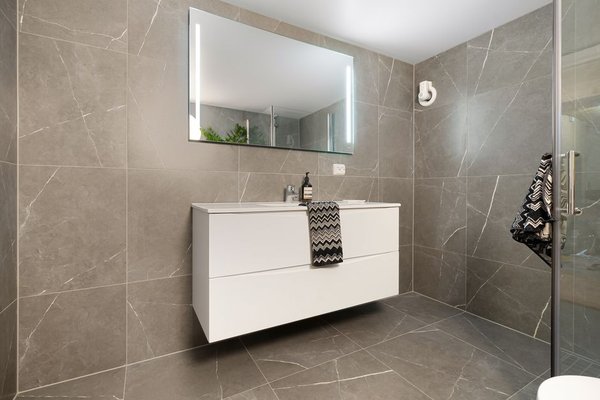
Two grout shades can be equally light but look very different beside the same tile. Hold samples against several tiles, especially if their colour or veining varies. For stone-effect porcelain, matching the main background shade generally looks calmer than matching an occasional dark vein.
Check the samples in daylight and under your bathroom lights. Warm LEDs may make ivory look richer and cool greys appear different from how they looked in the shop. If you are still selecting tiles, consider your bathroom tile layout ideas at the same time as the grout; layout and contrast work together.
Joint Width Changes the Result
Grout has greater visual weight when joints are wide. Narrow joints in a matching shade can almost disappear, while wider charcoal joints create a stronger grid. Follow the tile manufacturer’s joint-width recommendations and installation tolerances rather than choosing a technically unsuitable gap for appearance alone.
Glossy tile faces can also make matt grout seem darker. Handmade-look edges may produce slightly varied joint widths. A finished sample shows these effects much better than a digital illustration.
What Grout Colour Means for Maintenance
Colour changes which marks you notice, not whether the grout gets dirty. White shows some dark stains; charcoal shows pale deposits; mid-tone neutrals may disguise everyday residue better. Actual grout maintenance depends on moisture, ventilation, the grout formulation and how regularly the area is cleaned.
Traditional cement-based grouts can be absorbent and may require sealing where the product instructions recommend it. Some modern cement-based products offer improved stain resistance. Epoxy grout generally has lower absorption and often needs no sealer, although it still needs cleaning. Select a formulation compatible with your tiles and the installation area.
Remove soap residue regularly, keep showers ventilated and use cleaners approved for the tile and grout. Acidic products can damage some stone surfaces and cementitious grout. For a deeper routine, consider guidance on cleaning bathroom tiles and grout. Remember that grout itself does not replace the waterproofing system behind shower tiles.
Make a Sample Board Before Choosing
Shortlist two or three shades and grout a few spare tiles at the intended joint width. Let the product cure and dry as directed before judging its colour. Wet grout can appear darker, and manufacturer colour cards are approximate rather than guarantees.
Imagine warm white wall tiles with brushed brass taps. On a sample board, ivory may create an almost continuous finish, greige may show the pattern gently, and mid grey may introduce a distinct grid. Stand the board upright near the shower or basin, then compare it again with the evening lights on.
Ask your installer to keep mixing and washing consistent. Excess water during cleanup, changing conditions and different cement-grout batches can cause shade variation. Where wall and floor tiles meet, compare the proposed grout shades alongside your bathroom flooring ideas so they feel intentional together.
Frequently Asked Questions
Which bathroom grout colour looks cleanest for longest?
A medium neutral may hide some everyday marks, but no colour prevents staining or limescale. Grout type, ventilation, water hardness and cleaning habits matter more.
Should grout be lighter or darker than bathroom tiles?
It depends on the look you want. A matching shade blends tiles together; contrasting grout emphasises their layout. Test both approaches on a small area.
Does grey grout work with white tiles?
Yes. Light grey creates soft definition, while charcoal gives a bolder outline. Choose a grey undertone that suits your particular white tile.
Can existing grout be recoloured?
Sound joints can sometimes be refreshed with a compatible grout colourant after cleaning and preparation. Cracked, loose or failing grout needs proper repair first.
Choose the Shade in the Room, Not on a Screen
The best bathroom grout colour balances the tile pattern, the room’s lighting and the upkeep you are comfortable with. Comparing a few properly dried samples takes little effort and can prevent a small finishing detail from distracting from an otherwise beautiful bathroom.